Pairing a Sauna With a Cold Plunge for Contrast Therapy in a Small Space
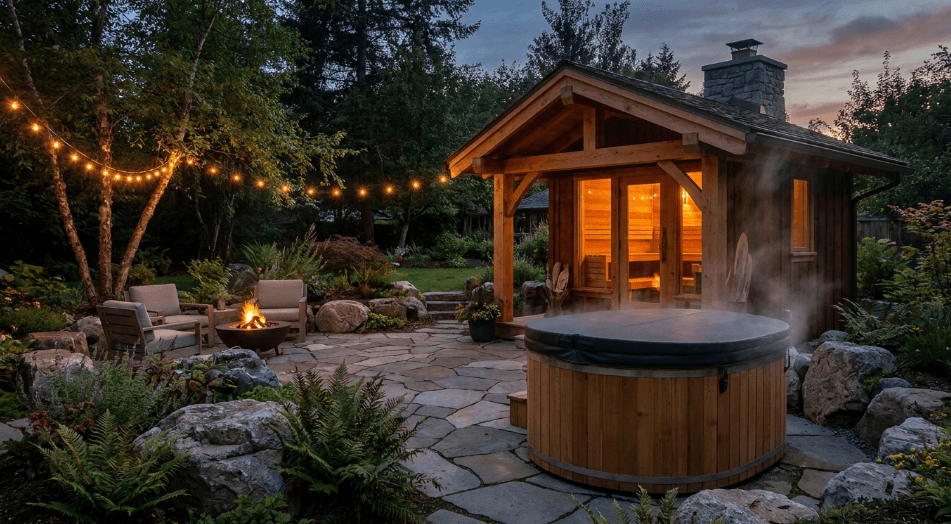
Contrast therapy pairs sauna heat with cold-water immersion in alternating rounds, and a small backyard can fit both: a 4×4 or 4×6 sauna next to a compact plunge tub holding 90 to 110 gallons, chilled to roughly 39 to 55 degrees Fahrenheit. The combination is popular for its cardiovascular and recovery reputation, but the underlying evidence is more specific than most marketing suggests, particularly around cold exposure and muscle-building goals. A small-footprint setup works well if the plumbing, drainage, and electrical needs of both units are planned together rather than as an afterthought.
What Does a Contrast Therapy Session Actually Look Like?
A typical protocol runs ten to fifteen minutes in the sauna, followed by one to three minutes in the cold plunge, repeated for two or three rounds, ending on whichever temperature matches the goal for that day. Ending on cold is common for a jolt of alertness, while ending on heat is more common before winding down. There is no single validated protocol that applies to everyone, and duration should scale to tolerance, especially for anyone new to cold immersion, where even thirty to sixty seconds is a reasonable starting point rather than jumping straight to a multi-minute round.
How Small Can a Combined Setup Actually Be?
A 4×4 electric cabin sauna and a compact plunge tub together take up roughly the same footprint as a hot tub, which makes the pairing realistic for a patio corner or a side yard many homes already have available. The plunge side needs a chiller, typically a half to one horsepower unit for a tub in the 90 to 110 gallon range, plumbed with basic filtration to keep the water usable between fills rather than dumping and refilling constantly. A nearby electrical outlet for the chiller and a drain point or hose bib for periodic draining are the two infrastructure items worth confirming before either unit arrives, since retrofitting either one after installation is far more disruptive than planning for it up front.
What Does the Cardiovascular Research Actually Show?
The sauna side of contrast therapy has a reasonably deep evidence base. A large Finnish cohort study found that men who used a sauna four to seven times a week had lower rates of fatal cardiovascular events than men who used one once a week, an association that persisted after adjusting for other risk factors. A follow-up study looked at how sauna use and cardiorespiratory fitness together relate to mortality risk, finding the two factors compounded rather than substituted for each other. A separate study measured short-term changes in blood-based cardiovascular markers after a single Finnish sauna session in regular users, adding some mechanistic detail to the cohort findings. All three are association studies built on regular sauna use specifically, not on contrast therapy as a combined practice, so they support the heat side of the routine more directly than the cold side.
Is the Cold Plunge Side as Well Supported?
Less so, and it is worth being honest about that. A 2025 systematic review and meta-analysis in PLoS One looked broadly at cold-water immersion’s effects on health and wellbeing and found a mixed picture rather than a clear benefit across outcomes. Other research on cold water after exercise has found it can reduce short-term muscle soreness, but a separate line of research suggests that routine cold exposure right after resistance training may blunt the strength and muscle-building adaptations that training is meant to produce. That does not make cold plunging pointless, but it does mean the timing matters: cold immediately after a hard strength session is a different decision than cold plunging as a standalone recovery or alertness practice on a rest day, and someone training for muscle growth specifically should weigh that tradeoff rather than assume more cold is automatically better.
What Does Water Care Look Like for a Small Plunge Tub?
A compact plunge tub does not have the volume to dilute contaminants the way a large pool does, so a basic filtration loop, run continuously or on a timer, matters more than owners often expect going in. Many small chillers include an integrated filter, but some owners add a secondary sediment or carbon filter for water that stays clearer between full drains. Ozone or UV sanitizing add-ons are common on chiller units marketed for cold plunge use specifically, since chlorine dosing at the small volumes involved is harder to manage consistently than in a larger body of water. A full drain and refill every few weeks to a couple of months, depending on use frequency and filtration quality, is typical for a home setup, and skipping this in favor of just topping off water level is one of the more common reasons a small plunge tub starts to smell or cloud over faster than expected.
What Should a Small-Space Buyer Compare Before Ordering Either Unit?
Because both pieces of equipment need to work together on a shared footprint, checking heater wattage on the sauna against chiller capacity on the plunge side, and confirming both fit the same electrical circuit or separate ones as needed, is worth doing before either purchase. A reasonable way to compare options for the sauna half of the pairing is to look at current listings and view current pricing across a few sauna makers, checking heater specs and cabin dimensions against the exact corner or patio space available, since a plunge tub next to an oversized cabin is a common way small-space plans go over budget or run out of room.
Frequently Asked Questions
What is contrast therapy with a sauna and cold plunge? Alternating heat exposure in a sauna with cold-water immersion, typically several rounds of ten to fifteen minutes hot and one to three minutes cold. It is a recovery practice, not a medical treatment.
Can a sauna and cold plunge both fit in a small backyard? Yes, a 4×4 or 4×6 sauna paired with a 90 to 110 gallon plunge tub fits many patio or deck footprints, given a drain point and an outlet for the chiller.
Does cold plunging after a sauna help muscle recovery? The evidence is mixed. Some research links it to less short-term soreness, but other trials suggest it can blunt strength and muscle-building adaptations after resistance training.
How cold does a plunge need to be for contrast therapy? Most home protocols use roughly 39 to 55 degrees Fahrenheit. A chiller sized to the tub’s gallon capacity matters more for consistency than the exact number.
References
- Association between sauna bathing and fatal cardiovascular and all-cause mortality events, JAMA Internal Medicine, 2015
- Joint associations of sauna bathing and cardiorespiratory fitness on cardiovascular and all-cause mortality risk, Annals of Medicine, 2018
- Short-term effects of Finnish sauna bathing on blood-based markers of cardiovascular function in non-naive sauna users, Heart and Vessels, 2018
- Effects of cold-water immersion on health and wellbeing: A systematic review and meta-analysis, PLoS One, 2025